
Plantar fasciitis can make simple movement feel unfairly difficult. The first steps in the morning may feel sharp, tight, or bruised, as if there is a tight band pulling under the foot.
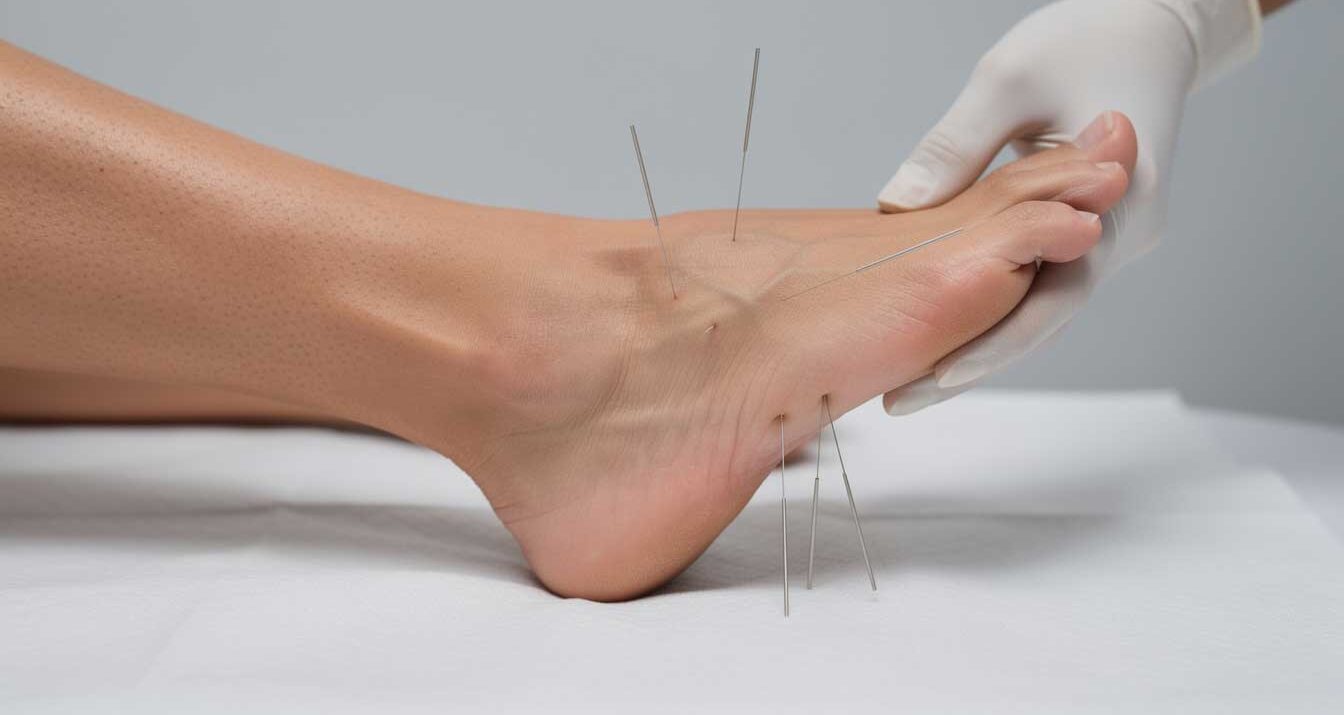
Dry needling for plantar fasciitis is a specialised way to address the muscle tension that often contributes to this cycle. Instead of only treating the sore point under the heel, your physiotherapist looks at the wider chain from the calf to the arch. When the calf muscles become tight, they can act like a tight rope, pulling through the Achilles tendon and increasing strain on the plantar fascia.
How Dry Needling for Plantar Fasciitis Targets the Source of Pain
The plantar fascia supports the arch of the foot. When it becomes irritated, the heel can feel tender, stabbing, or stiff, especially after rest. However, the source of the strain is not always only in the foot. Tight calves, restricted ankle movement, and overworked foot muscles can all keep pressure on the heel.
A dry needling treatment for plantar fasciitis uses fine, sterile needles to target sensitive trigger points in muscles holding too much tension. At The Physio Studio, dry needling is used as part of a careful assessment-led plan, helping reduce the pull from the calf and giving irritated heel tissues a better chance to settle.
A typical plan may focus on:
- Reducing calf tightness.
- Improving ankle and foot mobility.
- Building strength so pain is less likely to return.

Releasing Calf Tension with Dry Needling for Plantar Fasciitis
The calf and heel are closely connected. When the calf is tight, the heel often takes the load. This is why pain may feel worse first thing in the morning, when the foot has been resting, and the calf-heel connection feels shortened.
Trigger point dry needling can help release overactive points in the calf muscles. These points often feel like knots or tight cords. By releasing that tension, treatment can create more “slack” in the tight rope between the calf and heel, making the foot feel less locked up.
Patients often describe helpful changes such as:
- easier first steps in the morning
- reduced calf heaviness
- better ankle movement
- less tenderness after standing or exercise
Combining Needling with Shockwave Physiotherapy
For stubborn heel pain, muscle release alone may not be enough. The plantar fascia itself may also need targeted support, especially when symptoms have been present for weeks or months. This is where shockwave physiotherapy can work well alongside needling.
This dual approach is an important part of our dry needling treatment for plantar fasciitis because it addresses two parts of the problem. Needling helps reduce tension in the calf and surrounding muscles, while shockwave therapy is used to stimulate the irritated tendon-like tissue at the heel. One treatment eases the pull through the calf and foot, while the other supports the sore attachment point.
Why Dry Needling for Plantar Fasciitis Needs a Full Physio Plan
Needling can be very useful, but it should not be treated as a stand-alone fix. Plantar fasciitis usually develops because several factors are working together, such as calf tightness, weak foot muscles, poor footwear support, reduced ankle mobility, or long periods of standing on hard surfaces.
A full physiotherapy treatment plan helps identify what is actually keeping your heel irritated. Your physiotherapist may assess your walking pattern, ankle range, calf strength, foot control, footwear, training load, and daily routine. This gives treatment a practical direction instead of relying on guesswork.
Your plan may include stretching, strengthening exercises, manual therapy, load management, footwear advice, and home strategies for morning pain. The goal is to help the foot tolerate normal daily pressure again.
Strengthening Your Arch with Pilates
Once pain starts to settle, the next priority is control. The foot needs strength, balance, and good movement habits so pressure is shared properly through the arch, ankle, knee, and hip. If one part of the system is not working well, the heel can become overloaded again.
Pilates can support this stage by improving lower-limb control, posture, balance, and body awareness. For heel pain, Pilates-style rehab can help you load the foot more evenly, control the arch, and build strength through the calf and hip.
Trusted Foot and Heel Care
The Physio Studio has supported patients since 2002, with a clear focus on careful assessment, professional treatment, and long-term recovery. Heel pain can affect work, exercise, sleep, and basic movement, but it should not be dismissed as something you simply have to tolerate.
Our team brings experience across sports physiotherapy and musculoskeletal physiotherapy, helping patients with everyday heel pain and more complex foot injuries. With dry needling for plantar fasciitis, the focus is always on matching treatment to the person in front of us, not applying the same routine to every sore heel.
Take Your First Step Toward Recovery
With dry needling for plantar fasciitis, your treatment begins with a thorough assessment, a clear explanation of what is driving your pain, and a personalised plan designed around your symptoms, activity level, and recovery goals. The aim is to reduce tension, improve movement, and help you return to walking with more confidence.
For a thorough assessment or to begin your personalised dry needling treatment for plantar fasciitis, contact The Physio Studio today. Call us at 01 825 0151 or email info@thephysiostudio.ie.
In the consult we will:
Identify
Assess what may be contributing to heel pain, calf tightness, arch strain, or restricted foot movement.Treatment
Provide targeted dry needling to help release calf tension and reduce strain through the plantar fascia.Tailored Solution
Build a plan that suits your symptoms, activity level, footwear needs, and recovery goals.It will also include:
Examination
Assess walking pattern, ankle mobility, calf strength, foot control, footwear, and pain triggers.Assessment
Identify whether heel pain may be linked to calf tightness, weak foot muscles, poor load management, or restricted ankle movement.Results
Help reduce heel pain, improve first steps in the morning, and support a more confident return to walking and activity.Contact us!
Call us on 01 8250151 to speak with one of our friendly team, ask any questions or to start getting help.
Alternatively, fill in a form, and we will get back to you as fast as possible.
You’ll be glad you did.
Client Testimonials
My experience of the clinic can be described as hugely positive. Excellent professional service by the team. The physiotherapy treatment and advice that I received was tremendously effective. Based on my experience I strongly recommend.Donal Carey
Great experience, had back pain and was seen by Ava weekly for nearly 2 monhts, she sorted out all the issues and was very happy with her. Great jobJames Cregan
Very positive experience, Had a back problem and it took a few weeks to sort but with the help of the team there is was sorted. Many thanks to Gerry and Ava for the helpMichael Higgins
Gerard obviously knows his stuff. Gave me very good advice.Stephen Horan
Accepted Insurances