
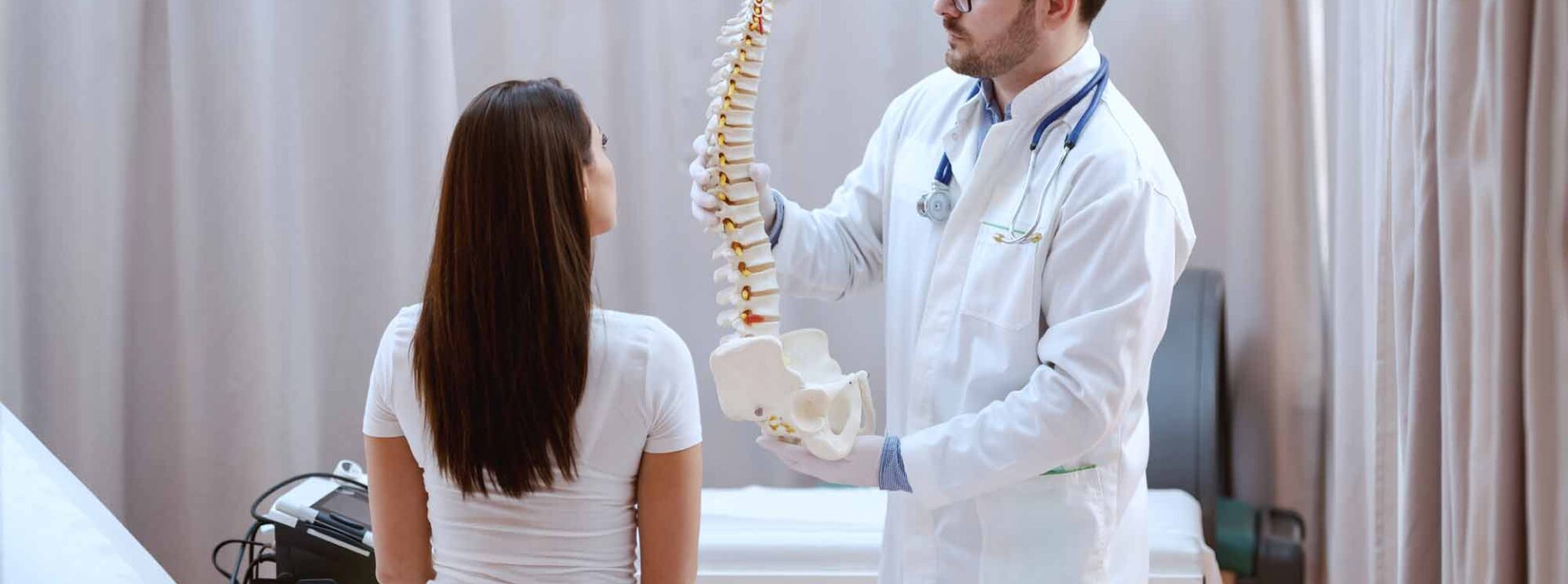

Pilates for scoliosis can be highly effective when it is adapted to your specific spinal curve, movement capacity, and clinical condition. At The Physio Studio, your programme is not treated as a generic fitness class. It is delivered through physiotherapist-led movement protocols designed to improve control, reduce avoidable strain, and support better spinal loading.
Scoliosis affects how your spine, ribs, pelvis, shoulders, and trunk organise movement. This means your exercise plan must account for asymmetry, not simply strengthen both sides equally. The Physio Studio uses clinical assessment, structured exercise modification, and targeted pilates principles to help you move with greater awareness and safer control.
Clinical Breakdown of The Physio Studio Scoliosis Physiotherapy and Pilates Program
A scoliosis-focused programme must be more precise than standard gym training or general core work. When your spine has a structural curve, symmetrical movements can sometimes reinforce the dominant side, increase compression through already loaded segments, or strengthen muscles that are already overactive.
At The Physio Studio, your physiotherapist assesses how your curve behaves in standing, sitting, side-lying, breathing, rotation, and loaded movement. This allows your exercises to be selected and modified around your actual spinal mechanics, not around a generic exercise template.
Understanding Curve Asymmetry Through Musculoskeletal Physiotherapy Principles
Scoliosis is not only a sideways curve. It is a three-dimensional spinal asymmetry involving lateral bending, vertebral rotation, and changes in rib cage and trunk position. This can cause one side of your body to become shortened and compressed, while the opposite side becomes lengthened, weakened, or less able to generate stable control.
These changes can affect how you stand, walk, breathe, sit, and load your spine during daily activity. Some muscles may feel tight because they are genuinely shortened, while others may feel tight because they are working too hard to stabilise an unbalanced structure.
Managing this type of asymmetry falls within the clinical scope of musculoskeletal physiotherapy. Your physiotherapist looks at joint mobility, muscle tone, breathing mechanics, pelvic alignment, shoulder blade position, and your ability to correct posture under control.
Without targeted management, repeated uneven loading may contribute to persistent discomfort and a chronic need for physio for back pain. This is why your programme must focus on curve-specific correction, not just general flexibility or abdominal strengthening.
How Your Physiotherapist Helps Correct Scoliosis Movement
At The Physio Studio, scoliosis-focused exercise may draw from Physio Scoliosis Specific Exercise, often known as PSSE, alongside principles associated with the Schroth Method. These approaches are designed to address spinal curves through active correction, rotational awareness, controlled breathing, and improved postural endurance.
The PSSE approach helps your physiotherapist identify the direction of your curve and the movement strategies needed to reduce poor loading patterns. Rather than asking you to “stand straight” or “engage your core” in a general way, your session focuses on where your trunk needs length, where it needs support, and where excessive rotation must be controlled.
Schroth-based principles can also help you understand concave and convex areas of your curve. The concave side often needs space, expansion, and length. The convex side may need improved control so it does not dominate movement or reinforce the existing rotation.
This changes how you exercise. A movement that looks simple from the outside may require very specific foot placement, pelvic correction, rib positioning, breathing direction, and shoulder alignment. Your physiotherapist guides these details so the exercise supports correction rather than repeating the same asymmetrical strategy.
Why a Specialised Physiotherapist Must Adapt Your Mat Pilates Layout and Positioning
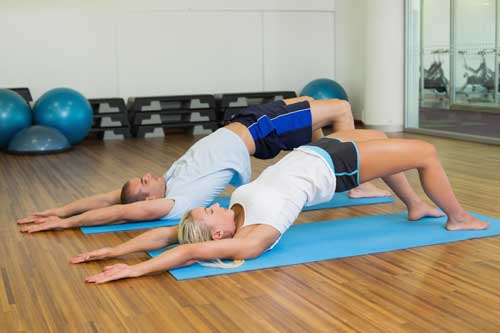
Mat pilates exercise can be useful for scoliosis because it allows your physiotherapist to control gravity, reduce unnecessary load, and position your spine with more precision. The floor gives a stable reference point, making it easier to identify where your ribs, pelvis, shoulders, and lower back are resting unevenly.
Your physiotherapist may adapt your position using cushions, wedges, folded towels, or small props to support spinal elongation. These adjustments can help create axial decompression, where your spine is encouraged to lengthen rather than collapse into the dominant curve pattern.
Breathing is also important. In a scoliosis-specific session, you may be coached to direct breath into restricted areas of the rib cage while maintaining controlled abdominal and pelvic support. This is different from general breathing cues used in standard exercise classes.
Gravity can be used strategically in side-lying, lying on your back, prone, or seated positions to reduce overactivity in the dominant side of your back. The goal is to improve control without allowing stronger muscles to take over every movement.
For those new to clinical core conditioning, carefully selected beginners pilates movements may be used to establish safe pacing. This can help you learn how to activate deep stabilising muscles, maintain neutral control where appropriate, and avoid pushing into positions that your spine cannot yet manage safely.
Addressing Secondary Postural Strain and Upper Back Irritation with Physiotherapy
A lateral spinal curve often affects more than the lower or middle back. It can change how your rib cage rotates, how your shoulder blades sit on your upper back, and how your neck compensates during sitting, lifting, desk work, or sport.
When your thoracic spine and ribs rotate, one shoulder blade may sit higher, wider, flatter, or more prominent than the other. This can change how your shoulder muscles work, especially around the upper trapezius, levator scapulae, rhomboids, and rotator cuff.
The Physio Studio uses custom exercise modifications to reduce this secondary postural stress. Your physiotherapist may adjust arm position, rib alignment, breathing direction, and scapular control so your upper back does not continue to compensate for the spinal curve.
This matters because repeated asymmetrical pulling through the upper back can contribute to mechanical shoulder irritation. A curve-specific approach can help reduce the ongoing structural strain that may otherwise lead to a need for physio for shoulder pain.
The aim is not to force your body into a rigid posture. The aim is to improve how your spine, ribs, pelvis, and shoulders share load during movement, so daily activity becomes more efficient and less irritating.
Booking Your Initial Clinical Physiotherapy Assessment
Safe pilates for scoliosis starts with an individual physiotherapy assessment. Your spinal curve, mobility, strength, symptoms, breathing mechanics, and movement habits must be examined before any spinal exercise programme is prescribed.
At The Physio Studio, your physiotherapist will assess how your spine behaves in different positions and how much correction you can safely achieve. This examination helps set clear movement boundaries, identify areas that need support, and reduce the risk of reinforcing the wrong pattern.
Your programme may include mat-based control work, postural correction, breathing drills, mobility work, strengthening, and home exercises. Each part should match your curve type, current symptoms, and tolerance level.
A comprehensive physical examination is mandatory before starting any scoliosis-specific spinal exercise programme at The Physio Studio. This is the safest way to make your care measurable, individual, and clinically appropriate.
Contact The Physio Studio to Arrange a Specialized Physiotherapist Consultation
To arrange an initial clinical appointment, contact The Physio Studio directly by emailing info@thephysiostudio.ie, calling 01 825 0151, or 083 177 8885. You can also get in touch to ask about studio accessibility, appointment availability, or whether physiotherapist-led pilates for scoliosis is suitable for you or your loved one.
The team can guide you on the next appropriate step, including assessment, movement screening, and a tailored exercise plan based on your spinal profile. Appointments are available through The Physio Studio’s dedicated Pilates Donnybrook and Pilates Dunshaughlin locations, allowing you to access clinical pilates support at the studio most convenient for you.
In the consult we will:
Identify
Assess how scoliosis affects your posture, spinal curve, rib position, pelvis, and daily movement control.Treatment
Use physiotherapist-led pilates exercises to improve spinal awareness, trunk control, breathing, and safer loading.Tailored Solution
Build a plan around your curve type, symptoms, mobility, strength, tolerance, and movement goals.It will also include:
Examination
Assess spinal movement, posture, balance, breathing mechanics, strength, and control in different positions.Assessment
Identify areas of compression, overactivity, weakness, rotation, and postural compensation linked to your scoliosis.Results
Help improve posture, movement confidence, spinal control, and comfort during daily activity and exercise.Contact us!
Call us on 01 8250151 to speak with one of our friendly team, ask any questions or to start getting help.
Alternatively, fill in a form, and we will get back to you as fast as possible.
You’ll be glad you did.
Client Testimonials
My experience of the clinic can be described as hugely positive. Excellent professional service by the team. The physiotherapy treatment and advice that I received was tremendously effective. Based on my experience I strongly recommend.Donal Carey
Great experience, had back pain and was seen by Ava weekly for nearly 2 monhts, she sorted out all the issues and was very happy with her. Great jobJames Cregan
Very positive experience, Had a back problem and it took a few weeks to sort but with the help of the team there is was sorted. Many thanks to Gerry and Ava for the helpMichael Higgins
Gerard obviously knows his stuff. Gave me very good advice.Stephen Horan
Accepted Insurances