
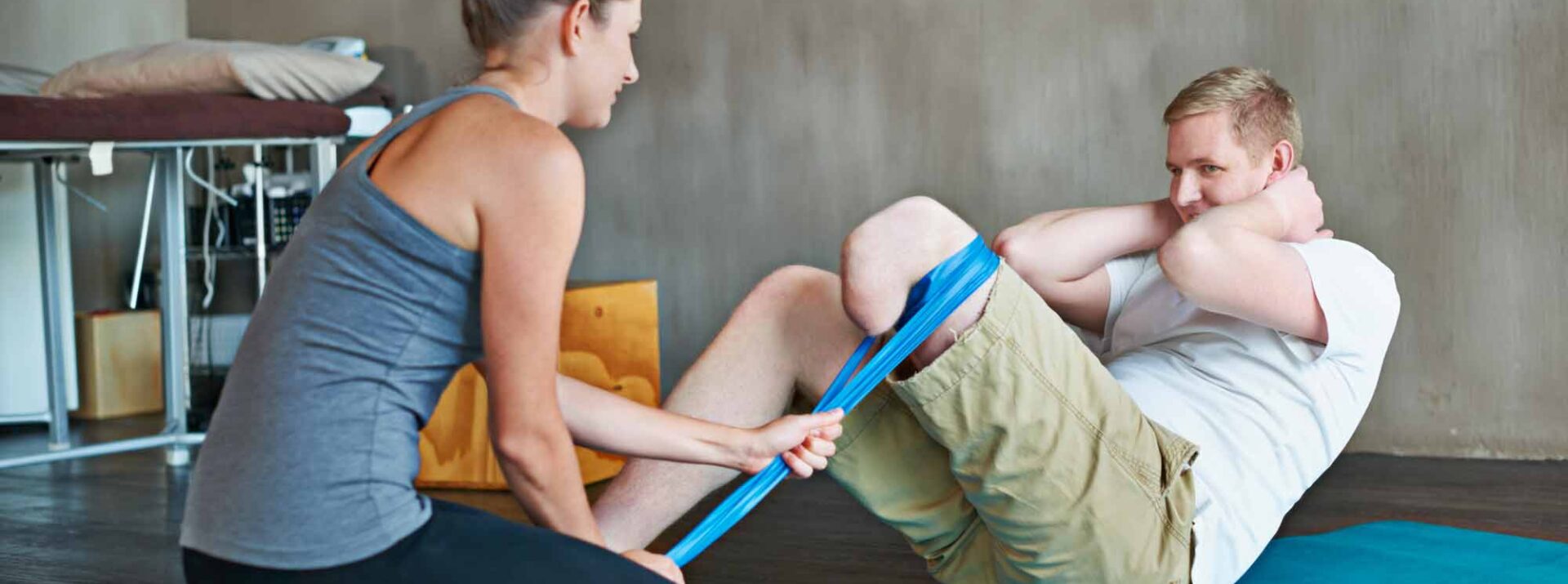

Adaptive clinical exercise can help you build full-body strength, expand your available range of motion, and improve confidence with everyday movement. At The Physio Studio, this care is delivered through accessible, physiotherapist-led movement protocols that are shaped around your body, your condition, and your practical goals.
Our approach to pilates is not based on forcing you into standard class positions. At The Physio Studio, pilates for disabled clients is modified with clinical reasoning, stable positioning, specialist props, and close physical supervision so you can train safely without being limited by a generic exercise format.
How Our Specialised Physiotherapy and Pilates for Disabled Clients Creates Accessible Movement
Commercial fitness environments can create serious barriers when you have reduced mobility, wheelchair reliance, limb differences, fatigue, reduced balance control, pain, or a long-term neurological or orthopaedic condition. Equipment may be difficult to access, exercises may move too quickly, and instructors may not have the clinical training needed to adapt loading safely.
In this setting, pilates for disabled clients must be planned as individual physiotherapy-led care, not a standard fitness class. The movement method itself has strong rehabilitation origins, as Joseph Pilates developed early exercise principles around hospital bed rehabilitation and support for injured soldiers. That history matters because the method can be highly adaptable when it is guided by clinical assessment and correct mechanical adjustments.
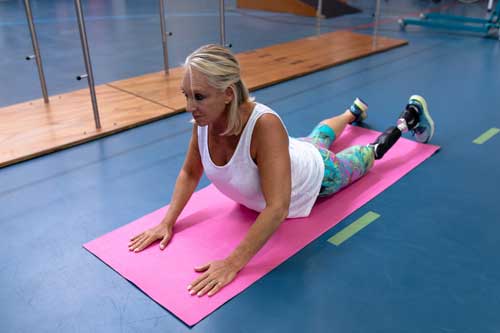
Pilates for Disabled Core Exercises Guided by a Chartered Physiotherapist
Chronic medical conditions, joint changes, surgery, spinal differences, muscle weakness, or uneven limb loading can change how your body distributes weight. If one area cannot contribute fully, another area often compensates, which may increase fatigue, reduce balance, or overload your spine, hips, shoulders, or neck.
Modifying exercise around limb differences, joint restrictions, orthopaedic changes, or long-term movement limitations sits within the clinical scope of musculoskeletal physiotherapy. Your physiotherapist can assess how your joints tolerate load, how your muscles coordinate, and how your posture changes in seated, lying, supported, or transitional positions.
For wheelchair-dependent lifestyles or adapted sitting postures, trunk weakness can place repeated pressure on the spine. In some cases, this creates a secondary need for targeted physio for back pain, especially when the back is working harder to compensate for reduced hip, pelvic, or abdominal control.
A safe pilates for disabled programme may include supported pelvic tilts, assisted breathing work, adapted arm loading, resistance-band control, or seated trunk activation. The goal is not to make every movement look standard; the goal is to help your body produce better force, reduce strain, and improve your capacity for daily tasks.
Modifying Equipment and Form During Your Pilates for Disabled Sessions with a Physiotherapist
Accessible exercise requires more than encouragement. You may need foam cushions to improve alignment, resistance bands to create graded loading, supportive chest straps to assist upright control, or stable seated and lying setups that reduce unnecessary strain.
Generic fitness classes rarely provide the custom-built padding, strap placement, slower pacing, and hands-on adjustments needed to keep you stable. At The Physio Studio, your physiotherapist can adapt the setup before the movement begins, rather than correcting you after discomfort, imbalance, or fatigue has already appeared.
Your programme may start with very small movement components. This can include learning how to control your breath, stabilise your pelvis, activate your deep abdominal muscles, coordinate your shoulders, or move one limb without losing trunk position.
These foundations are also used within our gentle beginners pilates programmes. Breaking movement down into simple, accessible parts helps remove barriers while still giving your muscles a clear training stimulus.
Accessible Small-Group Care at Our Dunshaughlin and Donnybrook Physiotherapy Clinics
Our studio environments are designed to support close supervision, clear instruction, and safe movement progression. You are not left to manage complex equipment alone, and you are not expected to keep pace with movements that do not suit your body.
Small-group layouts allow your physiotherapist to remain close enough to adjust props, hand you equipment, correct alignment, or assist with physical positioning. This is important when you need help moving from sitting to lying, setting up a strap, controlling fatigue, or finding a more stable starting position.
Clinical class availability is supported across our specialised clinic settings, including Pilates Dunshaughlin and Pilates Donnybrook. These locations allow you or your loved one to access guided adaptive exercise in a controlled setting where your comfort, safety, and functional ability remain central to every session.
The goal is improved independence. Custom resistance loading can help maintain joint health, improve muscle coordination, reduce chronic fatigue patterns, and make daily activities such as transfers, reaching, dressing, sitting tolerance, or supported standing easier to manage.
Improving Your Balance and Mobility with a Specialised Physiotherapist
When movement is affected by neurological conditions, vestibular problems, reduced proprioception, or brain-to-muscle signal changes, exercise needs to be structured carefully. Repetition can help keep nerve pathways active, but poor positioning or unsafe balance challenges can increase the risk of falls or failed movement patterns.
Our adaptive physiotherapy tracks use principles shared with neurological physiotherapy, especially when your movement is affected by stroke, multiple sclerosis, Parkinson ’s-related changes, spinal cord injury, or other neurological conditions. Your physiotherapist can adjust the task so your nervous system is challenged without overwhelming your available control.
Balance training may also include concepts used in vestibular physiotherapy. This can support spatial awareness, head and eye coordination, postural confidence, and safer transitions during sitting, turning, standing, or wheelchair transfers.
Progression is based on your response. You may begin with stable supported work before moving into resisted patterns, controlled reaching, weight shifts, or more demanding coordination tasks. The exercise should meet your current capacity while giving your body a realistic path towards stronger, safer movement.
Book Your Initial Clinical Physiotherapy Assessment Today
Safe and accessible adaptive loading must be completely personalised. Before you begin, a comprehensive physical examination with a qualified physiotherapist at The Physio Studio is mandatory.
This assessment helps establish your baseline strength, comfortable range of motion, postural control, spatial balance, fatigue behaviour, pain triggers, and specific physical needs. It also gives your physiotherapist the information needed to map your goals, choose safe starting positions, and build a customised exercise programme that respects your condition.
Contact a Chartered Physiotherapist at The Physio Studio
Contact The Physio Studio directly to arrange your initial clinical appointment or to ask about clinic accessibility before booking. Your physiotherapist can advise on the most suitable starting point, whether you need one-to-one support first, and how adaptive studio sessions may fit your mobility, strength, and daily function goals.
You can contact The Physio Studio by emailing info@thephysiostudio.ie, calling 01 825 0151, or 083 177 8885.
In the consult we will:
Identify
Assess mobility, strength, posture, balance, fatigue, pain triggers, and any physical barriers affecting safe movement.Treatment
Use adaptive physiotherapist-led pilates to improve control, strength, balance, coordination, and daily function.Tailored Solution
Build a plan around your condition, mobility level, support needs, comfort, and practical movement goals.It will also include:
Examination
Review seated control, lying positions, joint tolerance, range of motion, balance, transfers, and fatigue response.Assessment
Identify compensation patterns, weakness, instability, pain triggers, access needs, and unsafe loading positions.Results
Help improve confidence, independence, strength, mobility, posture, and safer everyday movement.Contact us!
Call us on 01 8250151 to speak with one of our friendly team, ask any questions or to start getting help.
Alternatively, fill in a form, and we will get back to you as fast as possible.
You’ll be glad you did.
Client Testimonials
My experience of the clinic can be described as hugely positive. Excellent professional service by the team. The physiotherapy treatment and advice that I received was tremendously effective. Based on my experience I strongly recommend.Donal Carey
Great experience, had back pain and was seen by Ava weekly for nearly 2 monhts, she sorted out all the issues and was very happy with her. Great jobJames Cregan
Very positive experience, Had a back problem and it took a few weeks to sort but with the help of the team there is was sorted. Many thanks to Gerry and Ava for the helpMichael Higgins
Gerard obviously knows his stuff. Gave me very good advice.Stephen Horan
Accepted Insurances