
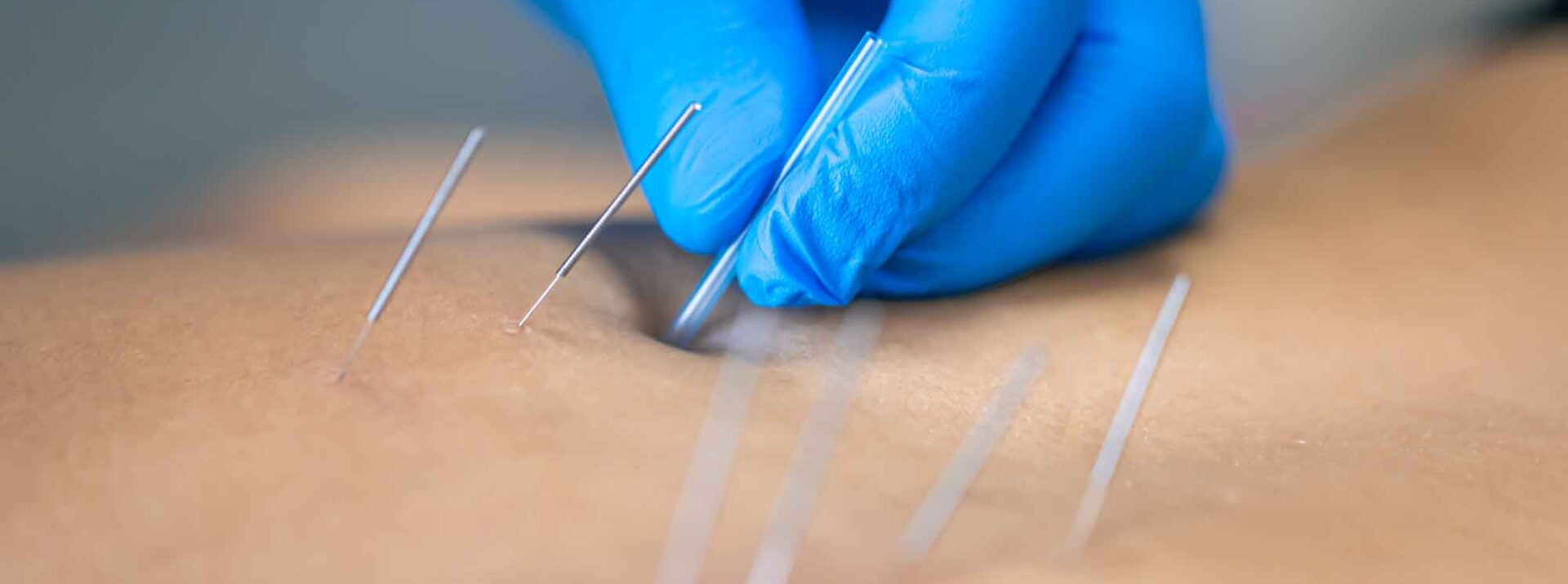

When your back feels locked, stiff, or caught in spasm, simple stretching is often not enough. Dry needling for back pain is a targeted physiotherapy technique used to calm irritated muscles, release deep tension, and help restore normal movement. At The Physio Studio, we use it as part of a structured clinical approach, not as a standalone quick fix.
Back pain often involves more than one tight muscle. The body can respond to pain with “spinal guarding”, which simply means it locks up to protect the painful area. This guarding can make the spine feel rigid, restrict bending or twisting, and keep the muscles in a constant state of tension.
Our approach to dry needling care focuses on identifying why the back is reacting this way, reducing the muscle spasm, and then rebuilding better movement through guided rehabilitation.
How Dry Needling for Back Pain Works
Dry needling uses a very fine needle to target irritated trigger points within the deep spinal musculature. These are sensitive, overactive areas in the muscle that can feel like knots, tight bands, or deep stiffness. Unlike massage, which works from the surface inward, dry needling can reach deeper muscles that are difficult to treat manually.
This can be especially useful when stiffness is sitting close to the spine or when the back feels locked despite rest, stretching, or heat. The goal is to reduce excessive muscle tone, improve blood flow, and help the nervous system calm down the protective spasm.
Common goals of treatment include:
- Reducing deep muscle tightness and guarding
- Improving bending, rotation, and general mobility
- Calming painful trigger points
- Supporting a smoother return to exercise, work, and daily activity
Dry needling is most effective when it is matched to a clear assessment. That is why our clinicians also look at posture, joint movement, strength, and the pattern of your symptoms before deciding whether needling is appropriate.

Releasing “Knots” with Dry Needling for Back Pain
One of the main reasons we use dry needling for back pain is to address trigger points. These are not just ordinary tight spots. They are areas where muscle fibres stay contracted and sensitive, often referring pain or creating stiffness beyond the exact point being treated.
During treatment, the needle may create a local twitch response. This is a brief, involuntary reaction in the muscle. Clinically, it can be a useful sign that the needle has reached the irritated trigger point. The goal is not to force the muscle, but to help reset its tone so it can relax and move more normally.
This is where trigger point dry needling can be useful for patients who feel stuck in a cycle of stiffness, temporary relief, and repeated flare-ups. When combined with the right movement plan, it can help reduce the barrier that stops the back from moving freely.
Why We Combine Dry Needling for Back Pain with Physio for Back Pain
Needling may reduce the spasm, but it does not automatically solve the reason the area became overloaded. That is why dry needling for back pain is usually the first step, not the whole treatment plan. Once the muscle has settled, we use physio for back pain to address the movement problem behind the symptoms.
This may include mobility work, strengthening, postural advice, load management, and education around safe return to activity. For many patients, this combined model is what makes our dry needling service more effective than simply treating the sore spot.
A typical treatment plan may include:
- Assessment of pain behaviour, mobility, and muscle tone
- Targeted needling to reduce spasm or trigger point sensitivity
- Hands-on care or guided movement where appropriate
- Strength and control exercises to reduce recurrence
This structure allows treatment to move from short-term relief into long-term improvement.
Better Movement Through Musculoskeletal Physiotherapy
Back pain is rarely isolated to one muscle. Musculoskeletal physiotherapy looks at how the spine, hips, pelvis, and surrounding tissues work together. If the hips are stiff, the spine may compensate. If the core or gluteal muscles are weak, the back may overwork. If posture or work habits are placing repeated strain on the same area, symptoms can return.
Through musculoskeletal physiotherapy, we may assess:
- Hip mobility and pelvic control
- Spinal movement and stiffness patterns
- Core strength and endurance
- Workstation posture or lifting habits
- Walking, bending, and sport-specific movement
- Muscle imbalances that increase strain on the back
This broader assessment helps us decide whether dry needling for back pain should be combined with strengthening, mobility drills, manual therapy, or education. It also helps avoid over-treating the painful area while missing the reason it became painful in the first place.
Keeping Your Back Strong with Pilates
Once pain and stiffness are under better control, the next priority is keeping the back strong. At The Physio Studio, pilates can be a valuable progression for patients who need better core control, spinal awareness, and confidence with movement.
A strong core does not mean holding the body rigid. It means the deep abdominal, pelvic, hip, and back muscles can support movement efficiently. This is especially important for people who sit for long periods, lift regularly, play sports, or have recurring back pain.
For some patients, our dry needling approach helps unlock the initial spasm, while pilates supports the next stage: building control so the same pain pattern is less likely to return. This creates a more complete rehabilitation plan, moving from relief to resilience.
Expert Clinical Care at The Physio Studio
The Physio Studio has provided expert care since 2002, supporting patients with back pain, movement problems, and rehabilitation needs across a wide range of clinical conditions. Every treatment plan is guided by assessment, clinical reasoning, and a clear understanding of what each patient needs to return to normal life.
Our physiotherapy treatment is designed to be practical, measured, and patient-centred. Where dry needling for back pain is appropriate, it is used safely within a wider plan that may include strengthening, mobility work, manual therapy, and education.
Book Your Assessment for Dry Needling Today
At The Physio Studio, your care begins with a thorough assessment and a personalised plan built around your symptoms, movement, goals, and daily demands. We aim to reduce pain, improve function, and give you a clear route forward.
For a thorough assessment or to begin your personalised treatment for back pain, contact The Physio Studio today. Call us at 01 825 0151 or email info@thephysiostudio.ie.
In the consult we will:
Identify
Assess what may be contributing to back stiffness, muscle guarding, trigger points, or restricted movement.Treatment
Provide targeted dry needling to help calm irritated muscles and reduce deep tension.Tailored Solution
Build a plan that suits your symptoms, movement limits, daily demands, and recovery goals.It will also include:
Examination
Assess posture, spinal movement, muscle tone, strength, and pain behaviour.Assessment
Identify whether dry needling should be combined with mobility work, strengthening, manual therapy, or education.Results
Help reduce stiffness, improve movement, and support a smoother return to work, exercise, and daily activity.Contact us!
Call us on 01 8250151 to speak with one of our friendly team, ask any questions or to start getting help.
Alternatively, fill in a form, and we will get back to you as fast as possible.
You’ll be glad you did.
Client Testimonials
My experience of the clinic can be described as hugely positive. Excellent professional service by the team. The physiotherapy treatment and advice that I received was tremendously effective. Based on my experience I strongly recommend.Donal Carey
Great experience, had back pain and was seen by Ava weekly for nearly 2 monhts, she sorted out all the issues and was very happy with her. Great jobJames Cregan
Very positive experience, Had a back problem and it took a few weeks to sort but with the help of the team there is was sorted. Many thanks to Gerry and Ava for the helpMichael Higgins
Gerard obviously knows his stuff. Gave me very good advice.Stephen Horan
Accepted Insurances