

The Physio Studio provides clinic-based care for people living, working, studying and travelling across South Dublin. Our team assesses joint, muscle, tendon and nerve-related problems that affect work, exercise, commuting and normal daily movement.
Every plan begins with a detailed assessment of the movements and tasks that have become difficult. This allows us to provide physiotherapy treatment based on your symptoms, current physical capacity and the activities you need to return to.
Physiotherapy Services Across South Dublin
People in Dublin 2 often balance professional work, study, city-centre commuting and long periods of seated screen-based activity. Office workers, legal professionals, students and retail staff may need support for pain or stiffness affecting the neck, shoulders, back, hips or lower limbs. Assessment can also account for gym training, running and the combined effect of a demanding workday with regular exercise.
Dublin 4 combines office work, local commuting, active family routines and high-level sporting activity. Patients may need support after a rugby, tennis or field-sport injury, or where running, sea swimming and repeated training are affecting the body’s ability to recover. Our sports physiotherapy approach considers strength, movement control, training load and the requirements of returning safely to regular activity.
People living and working across Dublin 6 may combine desk-based work, retail activity, driving, family routines, competitive running, tennis or field sport. A physiotherapy assessment can identify whether pain or reduced movement is linked to joint restriction, tendon overload, reduced control or a change in training demands. Rehabilitation is then progressed around the person’s work, sport and practical movement goals.
Dublin 6W patients may be managing suburban commuting, desk work, driving, club sport, gym activity or recurring tendon and spinal symptoms. A structured assessment helps identify how loading, movement timing and tissue capacity are affecting daily function. Where clinically appropriate, dry needling or shockwave physiotherapy may be included within a wider rehabilitation plan alongside exercise, hands-on care and progressive loading.
Dublin 8 includes inner-city travel, hospitality, retail, office work and regular recreational activity. Cycling, climbing stairs, standing shifts, public transport, running, rowing and gym training can all place different demands on the spine and lower limbs. For patients who need more controlled trunk movement or better postural endurance, clinical Pilates may support a wider rehabilitation plan following individual assessment.
People across Dublin 10 may need support with pain or injury linked to lifting, driving, standing shifts, manual work, gym training or field sport. Assessment focuses on how symptoms behave during the tasks the patient needs to complete, rather than the diagnosis alone. This helps us set practical goals for restoring work capacity, movement confidence and safe return to activity.
Dublin 12 includes logistics, warehouse work, industrial roles, retail activity, commuting and field sport. Patients may be managing symptoms related to carrying, pushing, pulling, repetitive handling, stair use or prolonged standing. We assess the demands of the relevant task and plan rehabilitation around safe progression in strength, movement control and tolerance for work or exercise.
Dublin 14 combines university travel, commercial work, suburban routines, regular running and gym activity. Patients may need support where prolonged sitting, stair use, carrying work equipment, training demands or repeated travel are contributing to symptoms. Assessment can include functional movements such as walking, lifting, squatting, running mechanics or a sport-related task where relevant.
Hill routes, outdoor activity, driving, school and work travel, gym sessions and active family routines can all influence movement demands in Dublin 16. Patients may need rehabilitation for lower-limb, hip, back or tendon concerns that affect walking, climbing, running or uneven ground. A structured plan can help rebuild control, strength and confidence before returning to more demanding activity.
Dublin 18 includes commercial travel, office-based work, long drives, gym training and access to hilly or uneven terrain. The same injury can affect someone differently depending on whether they are managing workstation demands, trail walking, running, hiking, court sport or active weekends. Treatment is progressed around measurable changes in movement, strength, balance and tolerance for the relevant task.
People in Dublin 20 may combine Liffey Valley travel with cycling, rowing, running, walking, gym activity and outdoor recreation. Repetitive loading can affect the foot, ankle, knee, hip, lower back or shoulders in different ways. Assessment and rehabilitation are matched to the activity involved, with changes to distance, terrain, resistance, technique or recovery time introduced at a measured pace.
Dublin 22 includes trade work, manufacturing, retail, residential routines and regular commuter travel. People may need support for symptoms affecting lifting, carrying, pushing, pulling, prolonged standing, driving or gym activity. Our team uses structured testing to identify the physical factors affecting function, then sets rehabilitation priorities that match the real demands of work, sport and home activity.
People in Dublin 24 may balance education, healthcare, retail, manufacturing, shift work, family routines, gym activity and field sport. A patient returning to a manual role may need support for carrying, reaching and prolonged standing, while another may be rebuilding tolerance for running or training. Recovery is planned around current function and the specific activities the patient needs to resume.
What to Expect From a South Dublin Physiotherapy Appointment
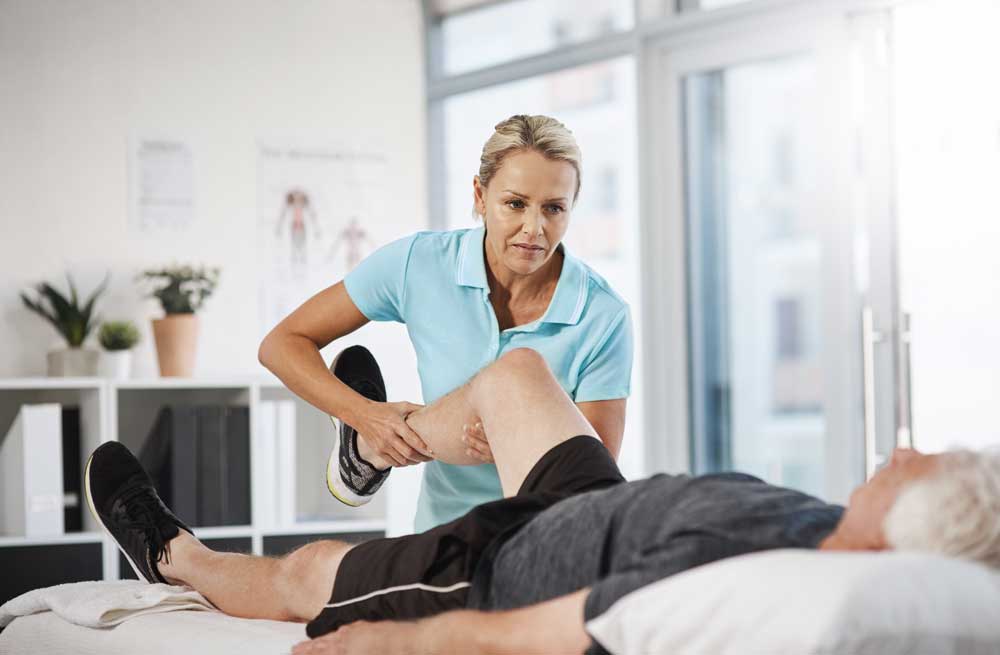
Your first appointment includes a discussion of the problem, previous injuries, relevant health information, work requirements, training habits and recovery goals. We then assess the relevant body area and may review joint range, muscle strength, balance, movement control, nerve function and functional tasks such as walking, lifting, squatting or reaching.
We identify the activities, positions and workloads that worsen symptoms, together with the changes that make them easier to manage. Where surgery has taken place, post-surgical rehabilitation is planned around medical guidance, healing status and the functional demands you need to regain.
Attend Our Physiotherapy Clinics in South Dublin
All consultations, assessments and rehabilitation sessions take place at our professional clinics in Dunshaughlin and Donnybrook. These settings provide the privacy, assessment space, treatment equipment and supervised exercise environment needed for accurate examination and safe progression.
We do not offer mobile appointments at homes, hotels or workplaces. Patients travelling from across South Dublin can attend either our Dunshaughlin or Donnybrook clinic for in-person physiotherapy assessment, treatment and ongoing review.
Book a South Dublin Physiotherapy Assessment
Pain, stiffness, repeated injury or reduced movement should be assessed before they further affect work, training, travel or everyday activity. Our team can identify the relevant physical factors and discuss an appropriate plan based on your current function and recovery goals.
To arrange an appointment, call 01 825 0151 or email info@thephysiostudio.ie.
In the consult we will:
Identify
Assess what may be contributing to back stiffness, muscle guarding, trigger points, or restricted movement.Treatment
Provide targeted dry needling to help calm irritated muscles and reduce deep tension.Tailored Solution
Build a plan that suits your symptoms, movement limits, daily demands, and recovery goals.It will also include:
Examination
Assess posture, spinal movement, muscle tone, strength, and pain behaviour.Assessment
Identify whether dry needling should be combined with mobility work, strengthening, manual therapy, or education.Results
Help reduce stiffness, improve movement, and support a smoother return to work, exercise, and daily activity.Contact us!
Call us on 01 8250151 to speak with one of our friendly team, ask any questions or to start getting help.
Alternatively, fill in a form, and we will get back to you as fast as possible.
You’ll be glad you did.
Client Testimonials
My experience of the clinic can be described as hugely positive. Excellent professional service by the team. The physiotherapy treatment and advice that I received was tremendously effective. Based on my experience I strongly recommend.Donal Carey
Great experience, had back pain and was seen by Ava weekly for nearly 2 monhts, she sorted out all the issues and was very happy with her. Great jobJames Cregan
Very positive experience, Had a back problem and it took a few weeks to sort but with the help of the team there is was sorted. Many thanks to Gerry and Ava for the helpMichael Higgins
Gerard obviously knows his stuff. Gave me very good advice.Stephen Horan
Accepted Insurances