

The weeks after birth are often described as the “fourth trimester”, a period of major physical recovery, hormonal adjustment, feeding demands, sleep disruption, and emotional change. Your body has worked through pregnancy and birth, and it deserves structured support as it heals. Postnatal physiotherapy helps new parents understand what is normal, what needs attention, and how to rebuild strength safely.
At The Physio Studio, we take a practical and reassuring approach. Since 2002, our clinical team has supported patients through careful assessment, clear guidance, and tailored rehabilitation. Rather than giving generic exercises, we begin with a thorough assessment and build a personalised treatment plan around your symptoms, goals, birth experience, and day-to-day demands.
The Importance of a Postnatal Physiotherapy Assessment
A postnatal check-up is not just about asking whether you feel “back to normal”. It looks at how your body is actually recovering after pregnancy and birth. This may include assessment of posture, abdominal control, pelvic floor function, breathing mechanics, scar sensitivity, pelvic stability, and any pain affecting your back, hips, neck, shoulders, or wrists.
During a postnatal physiotherapy assessment, we may review:
- Abdominal recovery, including signs of diastasis recti, which is a separation or widening of the abdominal muscles.
- Pelvic floor symptoms, such as leaking, heaviness, pressure, pain, or difficulty returning to exercise.
- Movement patterns during lifting, feeding, carrying, bending, and getting up from the floor.
- Scar recovery following a caesarean birth or perineal trauma.
- Your current exercise level and what you would like to return to safely.
This assessment helps identify the right starting point. It also ensures that your rehabilitation is matched to your body, rather than based on a fixed timeline.
Healing and Restoring Core Function with Postnatal Physiotherapy
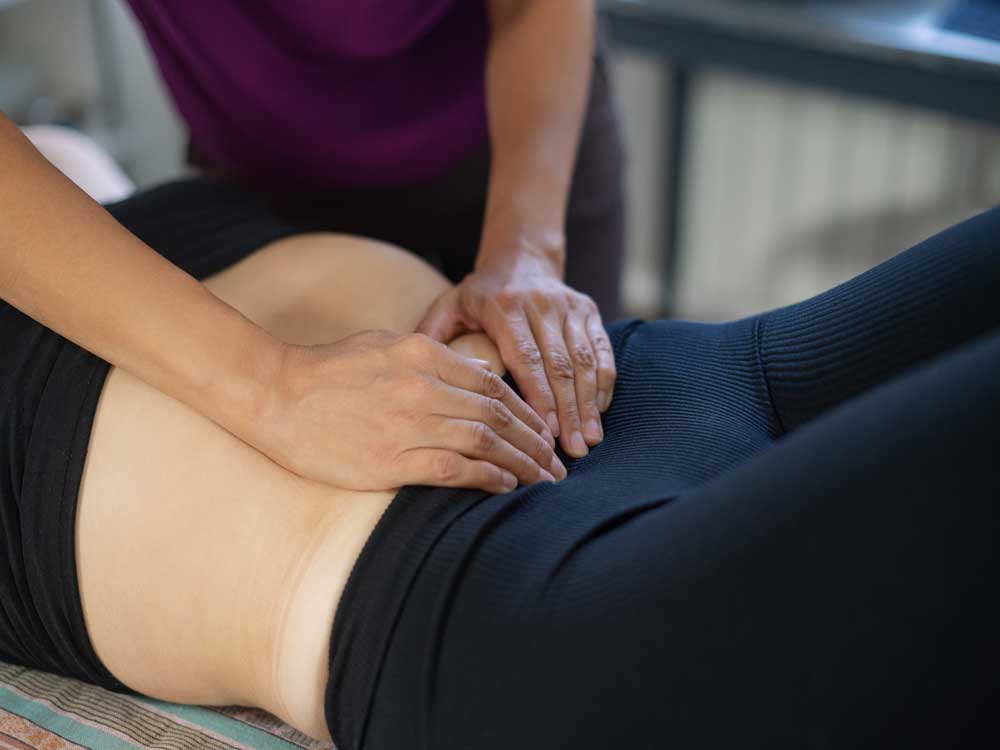
Pregnancy stretches the abdominal wall and changes how the deep core muscles work. After birth, some people notice a doming or bulging through the midline of the tummy, reduced strength, lower back discomfort, or a feeling that their core is not supporting them as it used to. This can be linked to diastasis recti, but it is also connected to breathing, posture, pelvic floor coordination, and load management.
Your treatment may include gentle activation work, breathing retraining, pelvic control exercises, and progressive strengthening. Where symptoms involve leaking, heaviness, or pelvic pressure, pelvic floor physiotherapy may be part of the wider plan. This sits within broader physiotherapy treatment goals: restoring control, improving confidence, and helping you move well during real tasks, not just during exercises.
Managing the Physical Demands of New Parenthood with Postnatal Physiotherapy
New parenthood places repeated strain on the body. Feeding positions, lifting a baby from a cot, carrying a car seat, pushing a buggy, and settling a baby for long periods can all contribute to aches and stiffness. Even when birth recovery is progressing well, these repeated movements can overload the neck, shoulders, back, wrists, and hips.
Common concerns include:
- Lower back pain from bending, lifting, or prolonged sitting.
- Neck and shoulder tension from feeding or looking down at the baby.
- Wrist or thumb pain from repeated holding and lifting.
- Pelvic or hip discomfort when walking, climbing stairs, or carrying weight.
- Reduced confidence with lifting, exercise, or returning to work.
If symptoms are more specific, support such as physio for back pain or physio for neck pain may be useful alongside your postnatal plan. The aim is not only to reduce discomfort, but to improve the way your body manages load during everyday parenting tasks.
Returning to Exercise and Pilates Safely with Postnatal Physiotherapy
Returning to exercise should be gradual, structured, and based on how your body responds. Some people feel ready quickly, while others need more time due to pelvic floor symptoms, abdominal separation, caesarean recovery, pain, fatigue, or birth-related injury. Postnatal physiotherapy gives you a safer route back to activity by testing strength, control, pressure management, and tolerance before increasing intensity.
A phased return may include:
- Reconnecting with breathing, pelvic floor, and deep abdominal control.
- Rebuilding basic strength through low-load movements.
- Progressing walking, mobility, and gentle conditioning.
- Introducing clinical pilates to improve control, posture, and strength.
- Gradually returning to running, gym work, sport, or higher-impact activity when appropriate.
For those who attended pregnancy physio during pregnancy, postnatal rehabilitation can feel like the next stage of the same journey. It helps you move from protection and recovery into strength, resilience, and long-term function.
Long-term Wellness for Mother and Baby
Postnatal recovery is not limited to the first six weeks. Symptoms can appear months later, especially when feeding changes, babies become heavier, sleep remains disrupted, or exercise increases. A personalised plan can help you manage these stages with confidence and reduce the risk of persistent pain or weakness.
The wider family unit also matters. Some parents ask about baby comfort, movement, feeding positions, head preference, or developmental concerns. Where appropriate, paediatric physiotherapy can provide support for baby wellness and developmental checks, while your own rehabilitation focuses on restoring strength, comfort, and physical confidence.
Professional Support in a Caring Environment
The Physio Studio provides private, supportive care in a calm clinical setting. Whether you attend our donnybrook physiotherapy clinic or our dunshaughlin physiotherapy clinic, you can expect a respectful appointment where your concerns are heard and your recovery is assessed properly.
Our approach is structured but never rushed. We understand that postnatal recovery can feel unpredictable, so we focus on clear explanations, achievable steps, and treatment that fits around real life with a baby.
Begin Your Recovery Journey Today
At The Physio Studio, we are dedicated to helping you regain your mobility and live a life free from discomfort. Our team of experts is ready to provide the thorough assessment you need to understand your injury and begin your journey toward lasting health.
For a thorough assessment or to begin your personalised treatment for postnatal physiotherapy, contact The Physio Studio today. Call us at 01 825 0151 or email info@thephysiostudio.ie.
In the consult we will:
Identify
Assess what may be affecting your postnatal recovery, core strength, pelvic floor function, posture, or movement confidence.Treatment
Provide supportive physiotherapy to help reduce discomfort, restore control, and guide safe recovery after birth.Tailored Solution
Build a plan that suits your symptoms, birth experience, recovery stage, daily routine, and personal goals.It will also include:
Examination
Assess posture, abdominal control, pelvic floor function, breathing, scar sensitivity, and movement patterns.Assessment
Identify whether symptoms may involve diastasis recti, pelvic floor weakness, pressure, pain, scar sensitivity, or load management.Results
Help you rebuild strength, return to exercise safely, and manage daily parenting tasks with more confidence.Contact us!
Call us on 01 8250151 to speak with one of our friendly team, ask any questions or to start getting help.
Alternatively, fill in a form, and we will get back to you as fast as possible.
You’ll be glad you did.
Client Testimonials
My experience of the clinic can be described as hugely positive. Excellent professional service by the team. The physiotherapy treatment and advice that I received was tremendously effective. Based on my experience I strongly recommend.Donal Carey
Great experience, had back pain and was seen by Ava weekly for nearly 2 monhts, she sorted out all the issues and was very happy with her. Great jobJames Cregan
Very positive experience, Had a back problem and it took a few weeks to sort but with the help of the team there is was sorted. Many thanks to Gerry and Ava for the helpMichael Higgins
Gerard obviously knows his stuff. Gave me very good advice.Stephen Horan
Accepted Insurances